Overview of Arc de Triomphe
This is a monumental structure in Paris, the Arc de Triomphe, which is a great icon of French history, culture, and national pride. This monumental arch, which is high on the western end of the renowned Champs-Élysées, is a place that draws millions of visitors annually.
The monument was commissioned in 1806, and it commemorates the people who fought and died in the defense of France in major wars, especially in the Napoleonic wars. It has a magnificent height of approximately 50 meters and is still one of the largest triumphal arches in the world.
Key Facts
- Height: 50 meters
- Construction Period: 1806–1836
- Architect: Jean Chalgrin
- Address: Charles de Gaulle.
Other than its architectural excellence, the Arc de Triomphe symbolizes oneness, memory, and the legacy of French history.
Location & Accessibility Overview
| Category | Information |
| City | Paris |
| Square Name | Place Charles de Gaulle |
| Number of Roads | 12 major avenues |
| Nearest Metro | Charles de Gaulle–Étoile |
| RER Line | RER A |
| Walking Access | Underground tunnel |
| Nearby Landmark 1 | Eiffel Tower |
Location and How to Reach Arc de Triomphe
Exact Location in Paris
Where and how to get to the Arc de Triomphe.
Precise Position in Paris.
The monument stands at the centre of one of the busiest intersections in Europe, Place Charles de Gaulle. It is an important hub in Paris where twelve major avenues radiate out of this central point.
Nearby Landmarks
Several nearby attractions can be easily visited by the visitors:
- Eiffel Tower
- Louvre Museum
- Seine River

Public Transport Options
It is easy to reach the Arc de Triomphe due to the good transport system:
- Paris Metro
- Charles de Gaulle-Etoile Station
- RER A
Directions and Access
The pedestrians must also walk to the monument through the tunnel provided because there is too much traffic on the roundabout.
History of the Arc de Triomphe
Commissioned by Napoleon Bonaparte

In 1806, Napoleon Bonaparte commissioned the Arc de Triomphe after his spectacular triumph, the Battle of Austerlitz, which was one of the most decisive battles in European history. Napoleon had a vision of a monumental structure to celebrate the courage, discipline, and accomplishments of the French army.
He did not merely want to glorify military victories, but he also wanted to instill national pride among citizens and soldiers. His most famous quote was that his soldiers would come home with arches of victory, as he hoped to bring the glory of the French army back to the country in the form of monumental architecture.
Construction Timeline
The Arc de Triomphe started to be constructed in 1806 under the supervision of architect Jean Chalgrin. It was, however,r slow and had numerous hiccups caused by political instability, ty such as the overthrow of Napoleon and the change of leadership.
Following the death of Chalgrin in 1811, a number of architects still worked on it but made an attempt to remain faithful to the original design. It was only built in 1836 under the reign of King Louis-Philippe, 30 years between the inception and the actual materialisation of the monument.
Regardless of these delays, the Arc did not lose its original purpose of a representation of victory and of national unity.
Historical Significance
The Arc de Triomphe has been at the centre of several major historical occurrences in France:
- Military parades on the occasion of victories and national accomplishments.
- World War I commemorations.
- Post-World War II celebrations and marches.
- National ceremonies like Bastille Day are conducted every year.
The victory parade in the Champs-Elysée that culminates at the Arc is one of the most iconic traditions, which symbolizes triumph and memory.
The monument is a strong symbol of sacrifice, bravery, and the everlasting identity of France today.
Architecture and Design Features
Architectural Style
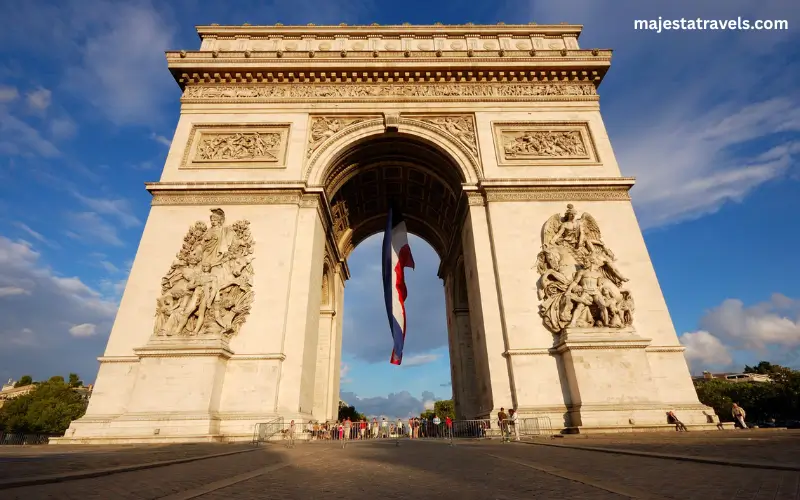
The Arc de Triomphe is a work of Neoclassical architecture, which greatly relied on the ancient Roman triumphal arches like the Arch of Titus. Its architecture shows a sense of symmetry, grandeur, and classical proportions, which were meant to portray permanency and strength.
The great size of the building, approximately 50 meters high, is a feature that makes the structure one of the largest triumphal arches in the world.
Architect
Jean Chalgrin, a renowned French architect who specialized in classical architecture, designed the monument. Chalgrin hoped to blend the grace and the Roman style with a grandiose and monumental scale that would embody the strength of the French Empire.
His initial plans were followed in the completion of the structure, even after his death,h so that there was uniformity in the design.
Structure and Materials
The Arc de Triomphe is mainly built using quality limestone, which provides it with a solid and strong foundation. The surface is decorated with intricate carvings and sculptures that depict the remarkable masterpiece.
The important structural characteristics are:
- The arch was supported by four huge pillars.
- On either side large sculptural reliefs.
- Detailed carvings on the inner and outer walls.
The design of the monument enables visitors to climb to the top, which provides them with panoramic views of Paris.
Symbolism
The Arc de Triomphe has its share of symbolism, as it is an embodiment of the military history of France and national pride:
- Its inner walls have the names of more than 600 generals carved on them.
- Major actions of the French Revolutionary and Napoleonic Wars are remembered.
- Sculptures like La Marseillaise give a portrayal of heroic and emotional events in history.
The monument is not only a work of architecture, but it is also a historical story in stone since every detail of the monument narrates something.
Tomb of the Unknown Soldier
Overview
The Tomb of the Unknown Soldier is one of the most significant war memorials in France, which is located at the foot of the Arc de Triomphe. It is dedicated to the unknown soldiers who died fighting in World War I in order to represent all those who lost their lives without honor.
Eternal Flame
The tomb has an eternal flame that glows all the time as a sign of remembrance and respect. The flame was first lit in 1923 and rekindled every evening in a solemn ceremony to remind people of fallen soldiers.
It is now a tradition, which is very strong and draws visitors and locals alike.
Historical Importance
The Tomb of the Unknown Soldier is of affecting national importance and a center of the ceremonies of memory:
- It is one of the major places where national events and memorial days take place.
- World leaders are known to give tribute here.
- It is a symbol of unity, sacrifice, and peace.
The tomb, which is found under one of the most iconic monuments of France, helps strengthen the functions of the Arc not only as a symbol of triumph but also as a symbol of contemplation and pride.
Arc de Triomphe
Opening Hours
The monument is open every day, and it has extended hours on the days when there are the largest number of tourists.
Ticket Prices
Ticket sales are available at the point of visit or through the Internet. Some categories, such as EU residents below 26, are free of charge.
Best Time to Visit
- Early morning to avoid people.
- Sunset to enjoy the beautiful scenery.
Climbing to the Top
Climbing to the top of the Arc de Triomphe is one of the best things to do when visiting the building.
Access
- Around 280 steps
- Partially accessible elevator.
Experience
Visitors will have breathtaking panoramic views of Paris, including:
- Eiffel Tower
- Champs-Élysées
Things to Do at Arc de Triomphe
Climb to the Top for Panoramic Views
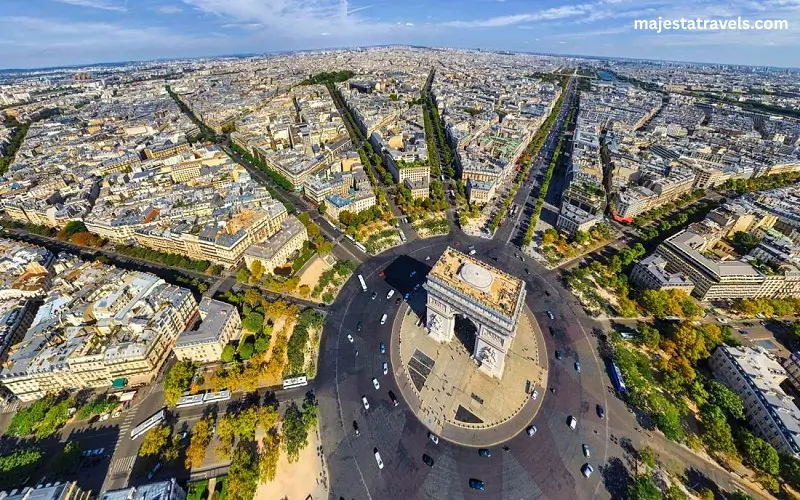
Climbing to the rooftop terrace of the Arc de Triomphe is one of the best experiences ever. Once the visitors have climbed almost 300 steps, they are rewarded with spectacular 360-degree views of Paris. At the top, one clearly observes the renowned star-shaped design of Place Charles de Gaulle, in which twelve major avenues lead out.
The perspective provides breathtaking views of attractions such as the Eiffel Tower, the Louvre Museum, and La Défense, and is therefore a destination that one cannot skip as a first-time traveler.
Capture Stunning Photos
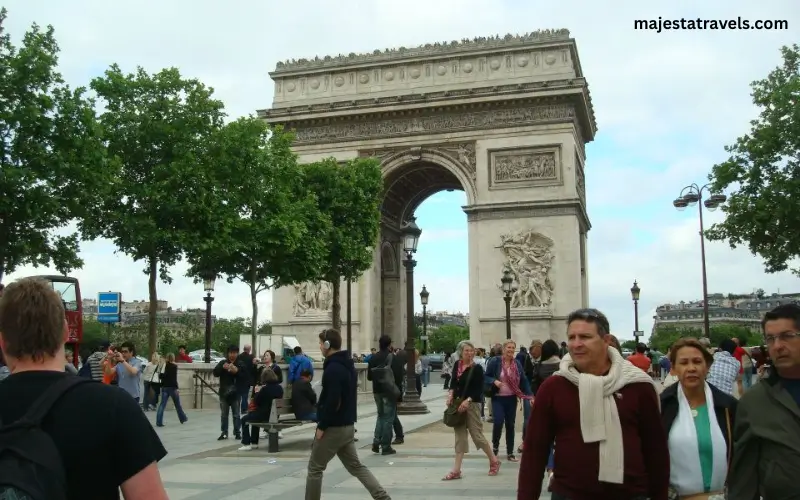
The Arc de Triomphe is a fantasy place for photographers. It has a grand building, intricate sculptures,s and is located at the center of the city, which makes it ideal to take great shots. The best time to take photographs of the monument is in the morning and at sunset, since soft lighting makes the monument beautiful.
When the monument is lit up, night photography is also spectacular,r and it gives a dramatic effect in contrasting it with the Paris skyline.
Walk Along Champs-Élysées
It is impossible to visit the Arc de Triomphe without walking through the legendary Champs-Elysée. It is one of the most renowned streets in the world, and a combination of luxury shopping, nice restaurants, and delightful cafes.
The avenue offers a lively Parisian experience with both up-market boutiques and local restaurants a few feet off the monument.
Visit the Tomb of the Unknown Soldier
The Arc has a very moving memorial at the bottom, om where the tomb of the unknown soldier is situated. This is a memorial to the unknown soldiers who died in World War I, and visitors can visit the tomb and remember what they sacrificed to make the country a better place to live.
The location is very emotional and historical, which is why it is among the most popular memorials in Paris.
Witness the Eternal Flame Ceremony
The eternal flame at the tomb is also lit every evening in a solemn ceremony. This practice has been going on since 1923 and has become a symbol of remembrance and honor for fallen soldiers.
The experience of observing this ceremony can be a respectful and important one, which can make visitors relate to the history and values of France.
Experience Night Views
After the sun goes down, the Arc de Triomphe becomes a magical place. The monument is lit with golden lights, making it beautiful against the night sky. The surrounding streets and the Champs-Elysée are also illuminated, and this makes the streets lively and romantic.
Couples and photographers in search of capturing Paris most magically prefer night visits.
Learn Through Sculptures and Engravings
The Arc is not only a monument but also an outdoor museum. It is adorned with elaborate sculptures and inscriptions covering its walls, and portraying scenes of the Napoleonic Wars.
Reliefs such as the La Marseillaise are well-known moments of bravery and nationalism. The name of generals and battles hewn into the rock also allows the visitor to learn more about the military history of France.
Join Guided Tours
Guided tours are strongly suggested for those who desire a more fulfilling experience. Professional guides will give in-depth information about the history, architecture, and symbolism of the monument.
There are also audio guides in various languages, which give the visitors the opportunity to take their own time as they listen to the interesting facts.
Watch Events and National Parades
The Arc de Triomphe is a hub of key events in the country, such as festivities on Bastille Day. There are military parades, anniversaries, and masses of people that frequently occur here, particularly in the Champs-Elysée.
When you visit on a special event, you will get to witness huge ceremonies which serve to show the culture of France, its history, and national pride.
Nearby Attractions
Visitors can explore:
- Eiffel Tower
- Louvre Museum
- Seine River
Travel Tips for Visitors
- Use underground access tunnels.
- Go in early or late to miss the crowds.
- Reserve tickets ahead of time.
- Wear comfortable shoes
Interesting Facts About the Arc de Triomphe
- One of the biggest arches in the world.
- Over 600 names engraved
- Undying fire never died away.
- At a crossroads of 12 roads.
Why the Arc de Triomphe Is Important
The Arc de Triomphe is not just a tourist attraction. It is:
- One of the symbols of France.
- A historical monument in memory of soldiers.
- One of the cultural highlights in Paris.
Conclusion
The Arc de Triomphe is a classic icon of history, architecture, and nationalism. It is an essential landmark in Paris, whether you are going there because of its historical importance, breathtaking scenery,y or cultural importance.
From its association with Napoleon Bonaparte to its contribution to modern-day tourism, the Arc de Triomphe still has millions of visitors each year.
Must Read: Top Riverine Place Destinations in Europe
Things to Do in Edinburgh Scotland
Europe Cork Travel Guide 2026
FAQs
1. What is the Arc de Triomphe famous for?
The Arc de Triomphe is also known to be a memorial of those who fought and died in defense of France, especially in the Napoleonic Wars and World War I. It is also one of the most iconic Paris landmarks.
2. Where is the Arc de Triomphe located?
It is in place Charles de Gaulle, the west end of the Champs- Élysées in Paris.
3. How many steps are there to the top?
The Arc de Triomphe has about 284 steps, which lead to the summit of the structure, giving a panoramic view of the city.
4. Is there an entrance fee for the Arc de Triomphe?
Yes, tourists will generally have to purchase a ticket to the rooftop. Yet, children below 18 and EU citizens below 26 may enter freely.
5. What can you see from the top of the Arc de Triomphe?
You can have breathtaking views of Paris, including the Eiffel Tower, the Louvre Museum and La Defense, among others, at the top.
6. What is the Tomb of the Unknown Soldier?
It is a monument under the Arc that honours unidentified soldiers who perished during World War I in honour of all those who died as soldiers.
7. When is the best time to visit the Arc de Triomphe?
Visiting in the early morning or late evening is the best time to spend a few hours and enjoy the beautiful light, particularly at sunset or nighttime.
8. Can you visit the Arc de Triomphe at night?
The monument is open in the evening, and it is a wonderful sight to visit the city at night when it is lit up.
9. How long does it take to visit the Arc de Triomphe?
The average visit lasts between 1 and 2 hours and involves climbing to the top and looking around the monument.
10. Are there guided tours available?
Yes, it has guided tours and audio-guides, which offer very in-depth information about the history, architecture, and the meaning of the Arc de Triomphe.