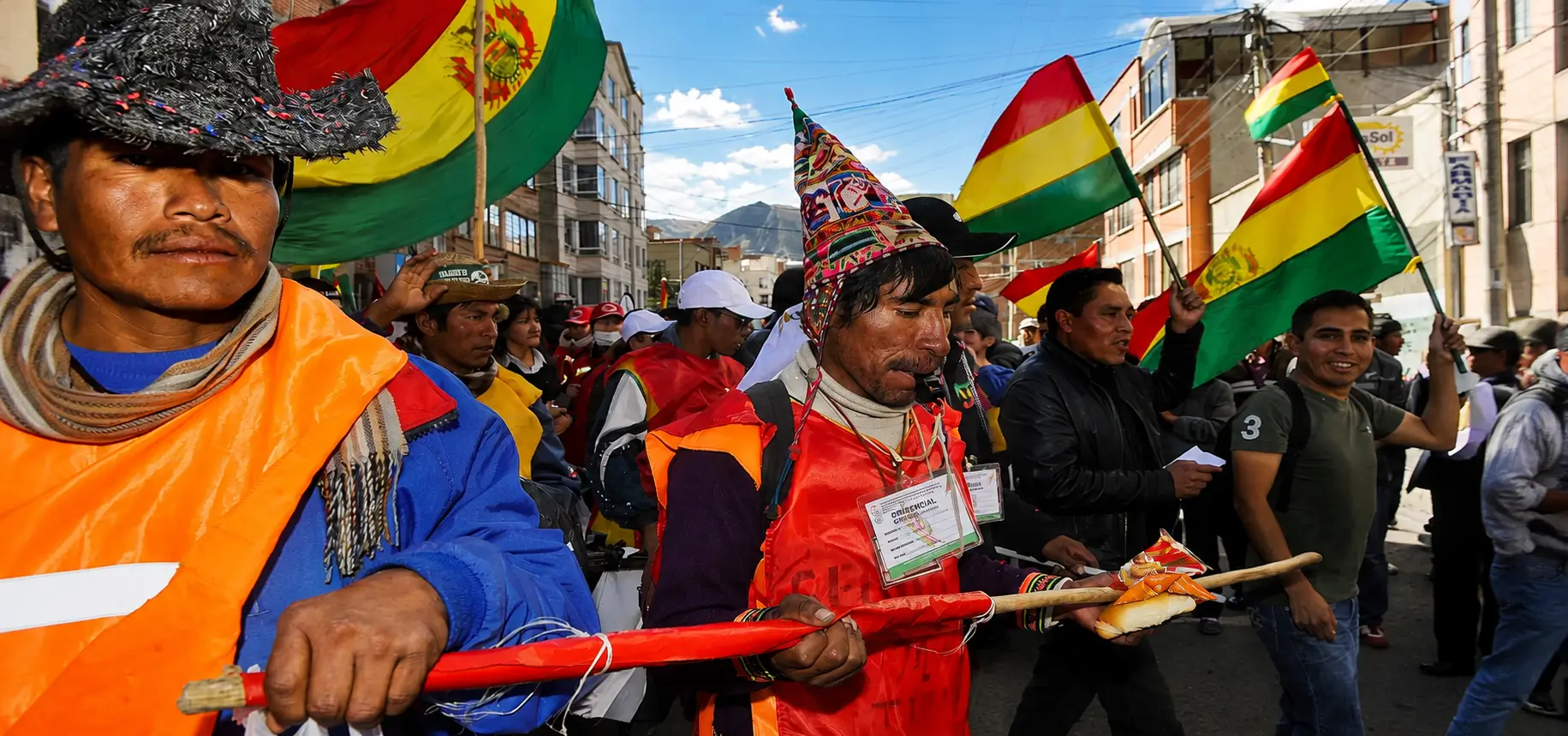
Bolivia is a very diverse country, with a rich cultural heritage and several languages spoken. The Bolivia country language system is special because it is the only country that recognises 37 languages as official. The Spanish language is the official language and is the language most widely used, and is also used in tourism, business, education and government services. Indigenous languages, like Quechua, Aymara and Guaraní, are also spoken by many people. These languages are still a significant part of local tradition and living. The linguistic diversity in the country is the result of its long history and multi-cultural nature. Knowing the languages spoken in Bolivia can facilitate communication and enhance the travel experience.
Location of Bolivia
Bolivia is a country in South America that is surrounded by land. It is flanked north, east, south and west by Brazil, Paraguay, Argentina, Chile and Peru, respectively. The country features varied topography, such as high plateaus, forests, salt flats, and mountains. Due to its central location, it is an important component of the cultural and geographical diversity of South America.
How to Reach Bolivia
Bolivia is well linked to South American countries by international flights and land border crossings. The country can be accessed by either air, bus or private car, depending on the point of origin.
By Air
The quickest way to get to Bolivia is by plane. Several countries in South America and others fly to the major airports.
By Bus
There are international buses that run between Bolivia and neighbouring countries. Many budget-minded travellers like this choice because they’ll be able to visit several locations.
By Car
There are several border crossings available for private vehicle entry into Bolivia. All travel and vehicle documents should be brought by travellers.
By Tour Package
There are many companies that provide travel packages with both tour and accommodation. A good choice for new visitors.
Bolivia Country Language and Official Recognition
Bolivia’s language system is special as it is the only country to have 37 languages that are recognised in the Constitution of 2009. The official language of the country is Spanish, but indigenous languages are also official.
This recognition is in recognition of Bolivia’s efforts to maintain its cultural diversity. Local communities, including Indigenous groups, are still using their native language in their daily lives, their education, cultural practices and in their local governments.
Bolivia actively encourages multilingualism, a practice which many countries have not embraced, in which native tongues have weakened considerably. Many areas have schools that offer instruction in both Spanish and native (indigenous) languages, which help maintain centuries-old language traditions.
How Many Languages Are Spoken in Bolivia?
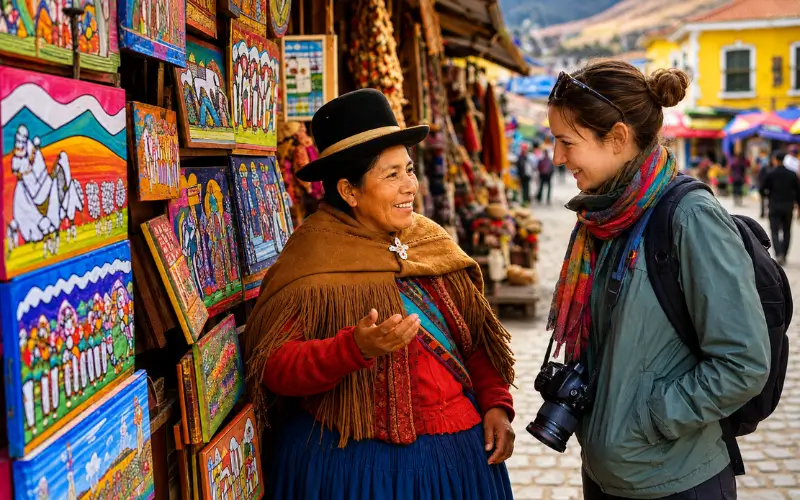
Bolivia is one of the most linguistically diverse countries in the Americas. There are dozens of languages that are officially recognised in the country; however, only a few are the most widely spoken.
In general, the languages can be categorised into three groups:
- Spanish
- Indigenous languages
- Immigrant languages
The Spanish language serves as the national language, but native languages are rich in many communities.
Language Distribution in Bolivia
| Language Group | Main Languages | Primary Areas |
| Spanish | Bolivian Spanish | Nationwide |
| Indigenous Languages | Quechua, Aymara, Guaraní | Highlands, Valleys, Chaco |
| Immigrant Languages | German, Portuguese | Santa Cruz and Border Regions |
Bolivia’s use of various languages is due to its ethnic diversity and history.
Spanish: The Most Common Bolivia Country Language
Most tourists in Bolivia speak Spanish. 70-84 per cent of the population speaks Spanish as their first or second language.
Spanish is used in:
- Government offices
- Schools and universities
- Airports
- Hotels
- Restaurants
- Shopping centers
- Tourist attractions
- Business environments
People with some Spanish will be able to comfortably travel through most of Bolivia without a big problem communicating.
The Spanish language is especially prevalent in urban areas like:
- La Paz
- Santa Cruz
- Cochabamba
- Sucre
- Potosí
These are the tourist and business centres where Spanish is the main language.
Bolivian Spanish Dialects
One interesting aspect of the Bolivia country language landscape is the presence of regional Spanish dialects.
While Spanish is the language used throughout the country, it has its regional accents, vocabulary and expressions.
Andean Spanish
The western part of Bolivia, particularly the city of La Paz and the Altiplano area, speaks Andean Spanish.
Characteristics include:
- Clear pronunciation
- Slower speech patterns
- Influence from the Aymara and Quechua languages
- Relatively neutral accent
Andean Spanish is easier to comprehend than some of the other Latin American Spanish dialects.
Camba Spanish
Camba Spanish is mainly found in eastern Bolivia, especially in Santa Cruz.
This dial is characterised by:
- Relaxed pronunciation
- Faster speech rhythm
- Regional vocabulary
- Influence from Brazilian Portuguese
Speakers in western and eastern Bolivia may sound different in certain respects, such as style and pronunciation.
Indigenous Languages in Bolivia
Bolivia country language is more than Spanish. National languages are vital to national identity and cultural life and play an important role in it.
Besides Spanish, the Constitution of 2009 acknowledges 36 indigenous languages.
The languages are still spoken by many communities today, who have not yet transitioned to English.
The three main indigenous languages spoken are:
- Quechua
- Aymara
- Guaraní
Together, they account for millions of speakers throughout Bolivia.
Quechua Language
Quechua is one of the most significant native South American languages. Some 18% – 28% of the population in Bolivia speaks Quechua.
Quechua has been historically the language of the Inca empire, and is still widely spoken nowadays.
Quechua-speaking regions include:
- Cochabamba
- Potosí
- Chuquisaca
- Rural Andean valleys
Language remains a significant part of local culture, music, storytelling and traditional celebrations.
The Quechua language will be heard by visitors throughout central Bolivia, in markets, villages and community gatherings.
Aymara Language
Aymara is another major indigenous language associated with the Bolivian language system.
Aymara is the native language of 10–18% of all Bolivians.
The language is particularly prevalent in:
- La Paz Department
- El Alto
- Lake Titicaca region
- Altiplano communities
The Aymara culture began long before the Inca civilisation. In present times, Aymara is a significant reminder of indigenous identity and cultural strength.
Aymara is still spoken in many traditional ceremonies and practices, and in numerous local festivals.
Guaraní Language
Seventeenth-century Bolivia is the main speaking region of guaraní. Guaraní is a small ethnic group but is culturally important, representing about 1% of the population.
The language features in:
- Chaco region
- Southeastern Bolivia
- Communities near Paraguay
The language is still used and is still being learned by the next generation in the guaraní-speaking population, who still have strong cultural traditions.
Other Indigenous Languages
Bolivia has a number of smaller indigenous languages in addition to Quechua, Aymara and Guaraní.
Examples include:
- Chiquitano
- Mojeño
- Tacana
- Cayubaba
- Itonama
- Movima
- Yaminahua
Several of these languages are used by smaller communities with cultural and educational initiatives to help preserve the language.
Immigrant Languages Spoken in Bolivia
Immigrant languages are another aspect of the Bolivia country language environment that is interesting.
These languages have been brought about by the settlers and immigrant groups over the years.
German
The Germans speak mostly in the Santa Cruz Department. There are about 160,000 people who speak German-related dialects.
The Mennonites tend to use:
- Plautdietsch (Low German)
- Standard German
Standard German is used in education and religious matters, and Plautdietsch is used for everyday communication.
Portuguese
There are also a few Portuguese speakers near the border with Bolivia and Brazil. Portuguese is spoken by approximately 0.2% of the population, but the language can be heard in border areas in the context of trade and travel with Portugal.
English in Bolivia
A question that is often asked by many tourists visiting Bolivia is whether English is widely spoken in the country. The level of English usage can be quite different in different areas.
English speakers tend to be more prevalent in:
- International hotels
- Tourist agencies
- Airports
- Popular tourist destinations
- Large cities
Outside of the big tourist areas, though, English is not widely spoken.
Those who are travelling to rural areas should not depend exclusively on English for communication. It is highly recommended to learn some basic Spanish phrases.
Language Use for Travellers
Most tourists will be able to get by in Bolivia with Spanish.
When travelling, you can communicate comfortably in Spanish with:
- Booking accommodation
- Ordering meals
- Purchasing tickets
- Using public transportation
- Purchasing goods in local markets
- Asking for directions
But in rural areas, bilingual speakers who use both Spanish and the indigenous language may be encountered.
Quechua or Aymara may be the language of the home, though Spanish is the official language, in many rural areas.
Useful Spanish Phrases for Visitors
Familiarising oneself with a handful of Spanish words and phrases can enhance the experience of travelling to Spain.
| English | Spanish |
| Hello | Hola |
| Good Morning | Buenos días |
| Thank You | Gracias |
| Please | Por favor |
| Excuse Me | Perdón |
| Where is…? | ¿Dónde está…? |
| How Much? | ¿Cuánto cuesta? |
| I Need Help | Necesito ayuda |
| Do You Speak English? | ¿Habla inglés? |
| Goodbye | Adiós |
These are useful expressions in all areas of Bolivia and will allow travellers to communicate with locals with increased confidence.
Should Travellers Learn Quechua or Aymara?
Neither do most of the visitors to Bolivia need to learn the indigenous languages before their trip.
Spanish continues to be the most useful language for a traveller.
But a few words of Quechua or Aymara can help make some cultural connections, especially when travelling, however:
- Lake Titicaca communities
- Rural villages
- Traditional markets
- Indigenous cultural festivals
People who show an interest in local language, customs and culture are often valued by local people.
Why Bolivia Preserves So Many Languages
Language preservation or maintenance is part of the national identity of Bolivia.
Government policies favour multilingual education and culture programs, which promote the protection of indigenous languages.
These actions contribute to maintaining:
- Oral histories
- Traditional knowledge
- Folklore
- Religious practices
- Community heritage
Language is an important aspect of the cultural identity for many indigenous groups.
This has left Bolivia known worldwide for its dedication to linguistic diversity.
Communication Tips for First-Time Visitors
Making advance arrangements for language differences can enhance the traveller’s experience.
Helpful strategies include:
- Learning simple Spanish words and expressions
- Offline translation apps are worth downloading; however.
- To bring the address of the hotel in Spanish
- Clear and slow voice pronunciation
- Using maps and visual aids
- Patience in discussions
The following are some easy tips to help communication across the country.
The Future of Languages in Bolivia
Language is being preserved in Bolivia throughout the country. The Government promotes the use of indigenous languages in addition to Spanish in the school environment and in public life.
Local languages are now being taught in many schools to the younger generation. Traditional languages are additionally documented and protected by research projects at universities and cultural organisations.
Language preservation is an important area where technology is being used. Indigenous languages are kept alive for future generations and for the interest of travellers through online dictionaries, learning resources and archives of culture.
Conclusion
The landscape of language in Bolivia is one of the most diverse in the world, with 37 official languages, including the 36 indigenous languages, as well as Spanish. The primary language of tourism, commerce, education, and everyday life is Spanish, while Quechua, Aymara, and Guaraní are also significant aspects of the country’s culture. Most travellers can easily travel and communicate in Spanish with the locals at popular destinations. But, if one knows the language of the Bolivian people, one can learn more about the country’s history, culture and communities, which would make any visit more meaningful and rewarding.
Must Read: Villaggio Hotel & Resort Abu Dhabi: Complete Guide for Travelers
Tulum Ruins Travel Guide | Exploring Mexico’s Ancient Mayan City by the Caribbean Sea
Beartooth Pass Travel Guide | The Ultimate Scenic Drive Through Montana and Wyoming
Frequently Asked Questions
What is the official language of Bolivia?
In Bolivia, there are 37 languages, of which Spanish is one and 36 indigenous languages.
What is the most spoken language in Bolivia?
The most widely spoken language in the country is Spanish, which is used throughout the country.
Is English commonly spoken in Bolivia?
English is spoken in tourist areas, but not everywhere.
What indigenous languages are most common in Bolivia?
The most common native tongues are Quechua, Aymara and Guaraní.
Do tourists need to learn Spanish before visiting Bolivia?
While not required, basic Spanish skills can enhance travel experiences.
Why does Bolivia have so many official languages?
The country is recognised and supports its rich linguistic and indigenous cultural diversity.
Where is Aymara mainly spoken?
Aymara is mainly used in western Bolivia, particularly around the city of La Paz and around Lake Titicaca.