The Louvre Museum is a world-renowned cultural icon and a top tourist attraction in Paris. With its world-class artworks, fascinating royal history, and glass pyramid front, the Louvre is a top tourist attraction. From art enthusiasts to history lovers and those seeking the best Parisian attractions, this museum has something in store for everyone.
Sitting on the banks of the Seine River in the center of Paris, the thousands of invaluable works of art from antiquity to modern times. ILouvre Museum houses is best known for the iconic Mona Lisa painting, but there is more to the museum than just one painting.
In this extensive travel guide, we will cover the history of the Louvre Museum, its must-see highlights, pricing and hours of operation, tips for visiting, and how it is considered one of the finest museums in the world.
Louvre Museum Overview
| Category | Details |
| Name | Louvre Museum |
| Location | Paris, France |
| Famous For | Mona Lisa and world-class art collections |
| Opening Hours | Usually open most days, daytime hours |
| Ticket Price | Paid entry, prices vary |
| Visit Duration | 2 to 5 hours recommended |
| Best Time to Visit | Early morning or weekdays |
| Top Highlights | Mona Lisa, Venus de Milo, Winged Victory |
What Is the Louvre Museum?
The Louvre Museum is France’s national museum and the world’s biggest art museum. Its collections, which cover thousands of years, span Europe, Egypt, Greece, Rome, the Islamic world, and more.
The Louvre began as a fortress in the late 12th century, evolved into a palace, and then a museum. It is now a testament to human ingenuity, cultur,e and achievement.
Why the Louvre Museum Is Famous
The Louvre is famous for several reasons:
- Home of the Mona Lisa, the world’s largest museum in terms of space
- Historic former royal palace
- Collections from ancient civilizations
- Architectural glass pyramid
- One of the world’s most popular museums
The Louvre Museum is a must-see for many visitors to Paris.
History of the Louvre Museum
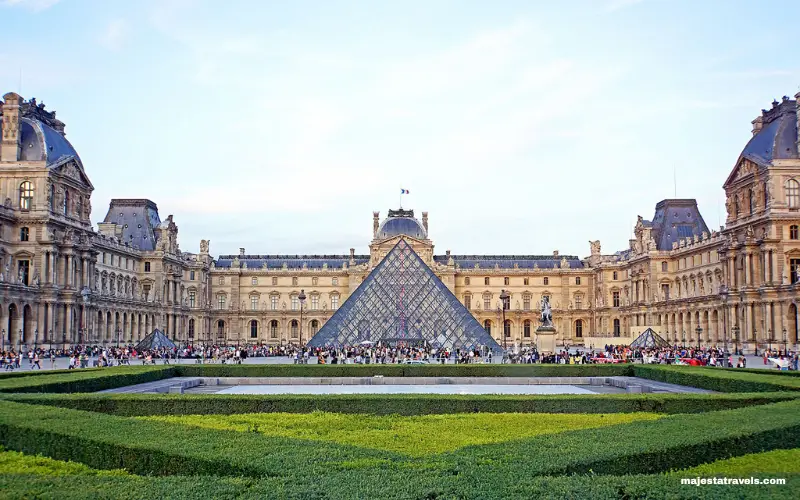
The Louvre Museum’s history is just as captivating as the works of art it houses.
Origins as a Medieval Fortress
The Louvre’s story starts in the late 1100s, when it was a fortress commissioned by King Philip II. It was designed to defend Paris against foreign enemies. You can still see parts of this in the basement of the museum.
Transformation into a Royal Palace
French monarchs over the years turned the fortress into an opulent palace. They expanded it with wings, rooms, and decorations, turning it into a beautiful palace for the royals.
Becoming a Public Museum
After the French Revolution, the Louvre was opened as a museum in 1793. This represented a significant change as artists’ works that had been previously only accessible to the elite were now available to the public.
The Louvre today symbolises public access to world art.
Where Is the Louvre Museum Located?
The Louvre Museum is in the centre of Paris on the Right Bank of the Seine River. Its central location makes it easy to visit on any itinerary of Paris.
Nearby Attractions
The Louvre is near many other attractions, such as:
- Tuileries Garden
- Musée d’Orsay
- Notre-Dame Cathedral
- Place de la Concorde
How to Get There
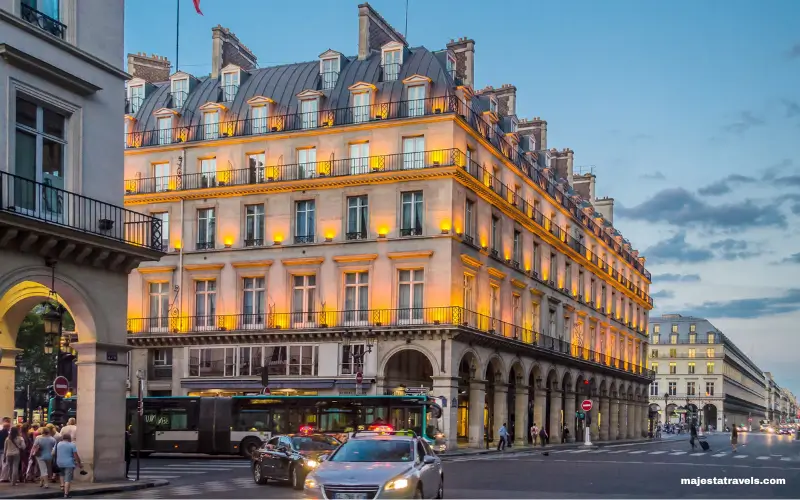
The Louvre can be accessed by:
- Paris Metro (Palais-Royal – Musée du Louvre station)
- Public buses
- Taxi or ride-share
- Walking from nearby attractions
It is one of the most accessible museums in Paris.
Louvre Museum Architecture
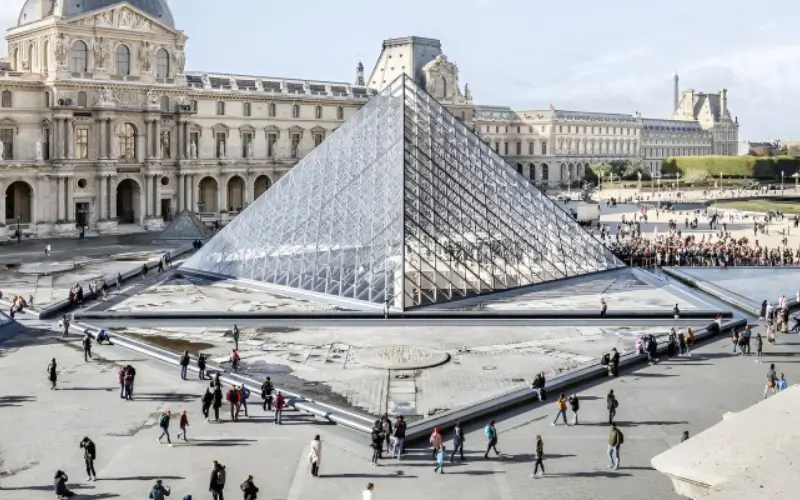
Louvre’s architecture is a blend of medieval, classical palace, and modern.
Historic Palace Design
The medieval parts of the palace include beautiful courtyards, facades, ceilings,s and staircases. These rooms are works of art.
The Glass Pyramid Entrance
The most famous part of the museum is the glass pyramid in the main courtyard. The pyramid was designed by I. M. Pei and opened in 1989, and became a modern landmark for Paris.
Museum Wings and Layout
There are three main wings of the museum:
- Denon Wing – Mona Lisa and Italian art
- Sully Wing – Ancient Louvre and Egyptian art
- Richelieu Wing – French sculptures and decorative arts
This will help you plan your visit.
Top Things to See Inside the Louvre Museum
With thousands of works of art, the Louvre Museum is one othe f world’s great art museums. Given its size, the first-time visitor should focus on the museum’s most important artworks and exhibits. Each room is a testament to human achievement, with legendary paintings, ancient sculptures, and invaluable treasures.
So if you’re visiting the Louvre Museum in Paris, here are the must-see exhibits.
Mona Lisa
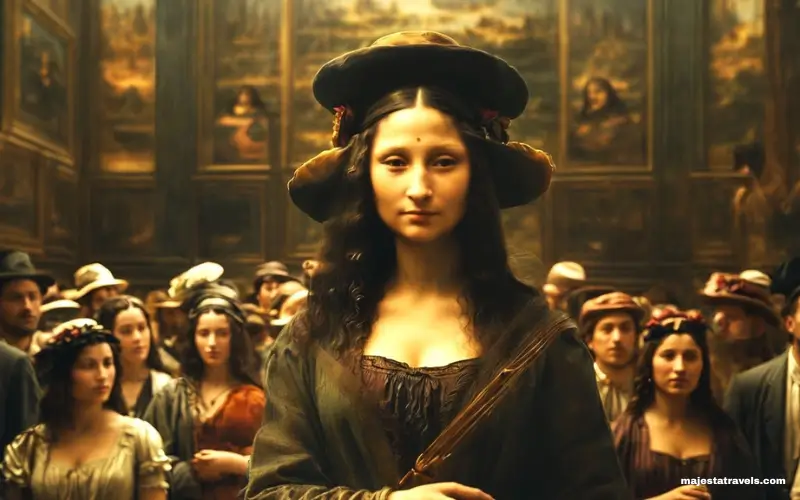
The Mona Lisa is the world’s most famous painting and a must-see at the Louvre Museum. Leonardo da Vinci painted this work in the early 1500s, and it continues to be a drawcard for millions of tourists.
The painting is admired for:
- The enigmatic expression of the subject
- Leonardo da Vinci’s pioneering of chiaroscuro
- Realistic facial expression
- Delicate background landscape
- Renaissance art historical significance
The Mona Lisa is much smaller than you might imagined, but it is a truly famous painting. It is housed under protective glass in a special room and is often surrounded by a crowd.
Visitor Tip: To enjoy the experience, visit early or late in the day.
Venus de Milo
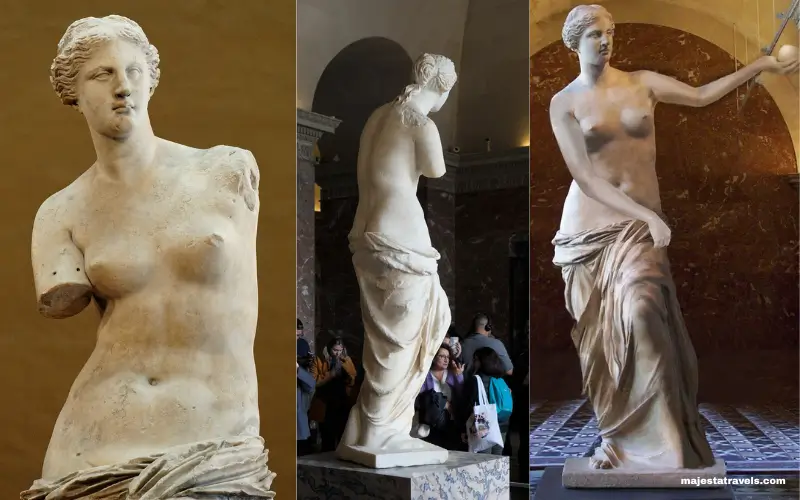
The Venus de Milo is one of the most famous Greek sculptures. Thought to depict Aphrodite, the goddess of love and beauty, the 2,000-year-old statue is carved from marble.
It is famous for:
- Elegant body proportions
- Timeless beauty
- Detailed drapery carving
- Legend of the missing arms
- Importance in classical Greek art
The Venus de Milo is one of the most photographed works in the Louvre and a symbol of ideal beauty.
Winged Victory of Samothrace
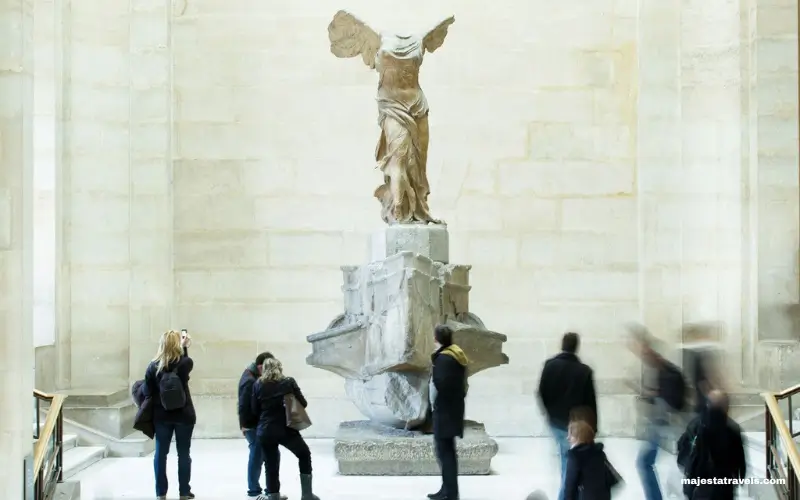
Another masterpiece of the Louvre Museum is the Winged Victory of Samothrace (Nike of Samothrace).
The statue of the Greek goddess of victory is placed dramatically on the top of a staircase. Despite being headless and armless, the statue is full of energy and movement.
Why visitors love it:
- Flapping wings and billowing drapery
- Impressive staircase display
- Symbol of triumph and movement
- Masterpiece of the Hellenistic period
It is often regarded as one of the masterpieces of sculpture.
Egyptian Antiquities
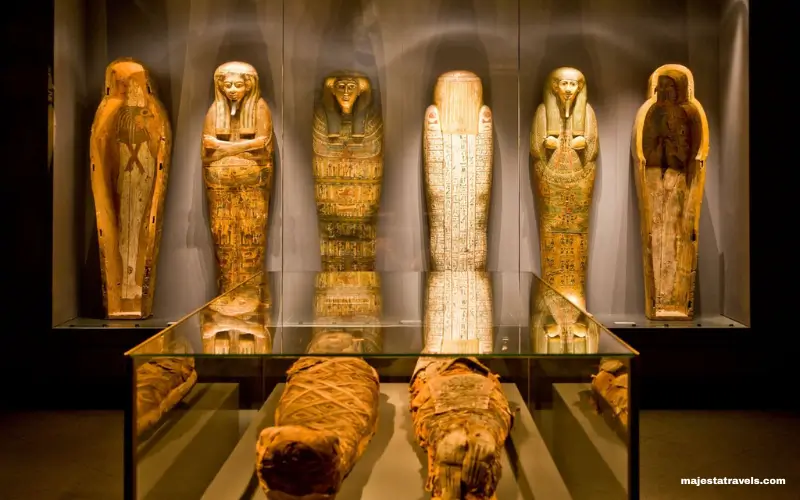
One of the most interesting galleries of the Louvre Museum is that of Egyptian Antiquities. This section houses thousands of artefacts from ancient Egypt, ranging from millennia in age.
Highlights include:
- Mummies and sarcophagi
- Pharaoh statues
- Hieroglyphic inscriptions
- Jewelry and ceremonial items
- Everyday utensils and daily items
- Temple sculptures and stone reliefs
These rooms transport visitors back to the days of pyramids, pharaohs and rituals. It’s a favourite with families and history enthusiasts.
Islamic Art Collection
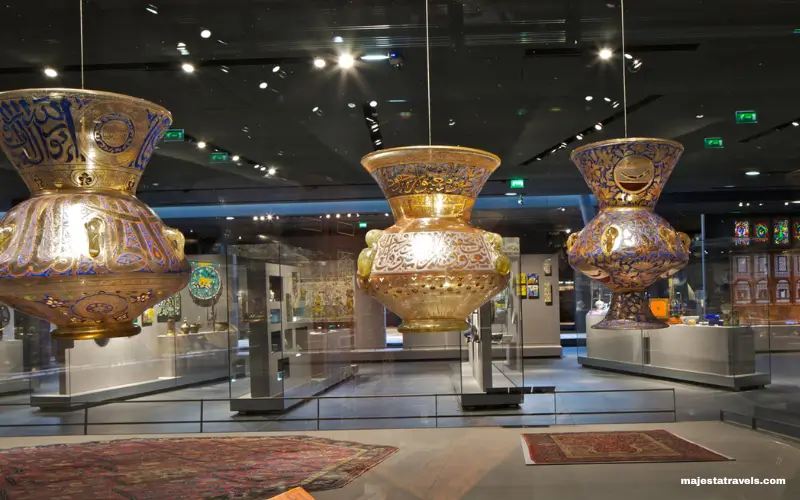
The Islamic Art Collection at the Louvre provides a fascinating glimpse into the artistic output of the Middle East, North Africa, Spain, Central Asia and more.
This exquisitely laid-out wing includes:
- Decorative ceramics
- Rare manuscripts
- Intricate metalwork
- Fine textiles
- Glass art
- Geometric and floral patterns
This gallery is often praised for showcasing the history of innovation, technique and cultural exchange. It also offers insight into the art history of the world outside Europe.
Renaissance Paintings
The Louvre Museum has an impressive collection of European Renaissance paintings. They depict an era in which artists revolutionised painting with realism, perspective, anatomy and emotion.
You can find masterpieces by:
- Raphael
- Titian
- Paolo Veronese
- Leonardo da Vinci
Famous highlights include:
- Religious scenes
- Royal portraits
- Mythological subjects
- Large ceremonial paintings
- Expertise in color and space
These rooms are a must-see for European history and classical art enthusiasts.
French Crown Jewels and Decorative Arts
The Louvre’s decorative arts are often ignored but they are spectacular. This displays opulent furniture, royal apartments, tapestries and crown jewels associated with French royalty.
What to see:
- Diamond crowns
- Gold ceremonial objects
- Palace furniture
- Lavish interior rooms
- Fancy tableware and decoration
Here, visitors can discover the opulence of royal France.
Mesopotamian and Near Eastern Antiquities
Near Eastern galleries contain some of the riches of some of the world’s earliest cultures.
Important exhibits include:
- Assyrian winged bulls
- Stone relief carvings
- Ancient tablets
- Palace decorations
- Early legal and administrative documents
These galleries can explain how civilization, cities and empires began.
Large-Scale Historical Paintings
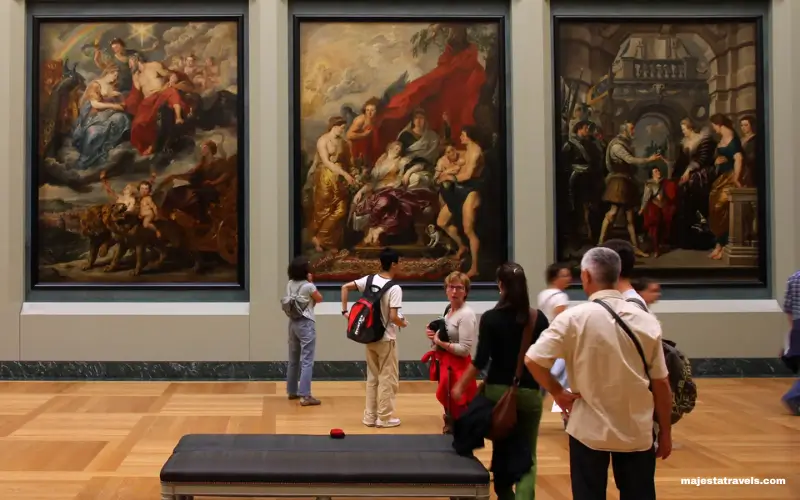
The Louvre is home to epic historical wall paintings. These are often scenes of battles, revolutions, coronations and power.
A highlight is:
Liberty Leading the People
These works are great for those interested in French politics and history.
Best Strategy for First-Time Visitorss
The Louvre is so huge, plan your visit wisely:
- Mona Lisa
- Winged Victory of Samothrace
- Venus de Milo
- Egyptian Antiquities
- Renaissance Paintings
- Decorative Arts or Islamic Art
This will help you have a taste of the museum’s highlights in a day.
Final Tip
There is more to the Louvre Museum than can be seen in a day. Rather than trying to see it all, concentrate on the great works of art and those sections of the museum that interest you. Whether you’re interested in ancient civilisations, sculpture, painting or architecture, the Louvre provides a wonderful museum experience.
Louvre Museum Tickets and Entry Information
It’s advisable to plan ahead for tickets.
Ticket Prices
General admission fees could vary but adult tickets are typically available through the museum’s official ticketing system and authorised vendors.
Free Entry Days
Free entry may be available to visitors on the basis of age, residency or museum programs.
Online Booking Tips
Book in advance during busy seasons
- Book for an early morning slot
- Use official channels when possible
- Keep mobile tickets ready
Skip-the-Line Options
Book timed entry and join a tour to skip the queues.
Louvre Museum Opening Hours
Hours can change throughout the year, so be sure to confirm them.
General Visiting Pattern
The Louvre Museum is typically open everyday except one set day.
Best Time to Visit
The best times to visit the Louvre Museum are:
- Early morning opening hours
- Late afternoon on weekdays
- Low season like winter months
We suggest avoiding weekends and holidays if crowds are a concern.
How Long Does It Take to Visit the Louvre Museum?
The museum is very large, so visit time varies.
Quick Visit (2 Hours)
A good choice if you’re interested in seeing:
- Mona Lisa
- Venus de Milo
- Winged Victory
- Palace courtyards
Half-Day Visit (4–5 Hours)
A half-day visit is ideal to visit a few galleries leisurely.
Full-Day Experience
Art enthusiasts can enjoy a full day of in-depth exploration.
Best Visitor Tips for the Louvre Museum
With a little preparation it is a better experience.
Arrive Early
Early visits tend to have fewer crowds and fewer people.
Use a Map
The Louvre is enormous. A map or mobile app helps you not to lose your way.
Wear Comfortable Shoes
You could cover several kilometers walking around the museum.
Prioritize Your Interests
Decide what areas to visit, such as Egyptian, Greek or Renaissance art, in advance.
Guided Tour vs Self-Guided
- Guided Tour: Ideal for first-time visitors seeking information
- Self-Guided: Ideal for self-directed visitors
Best Time of Year to Visit the Louvre Museum
Spring
Spring is nice with pleasant temperatures and lovely gardens.
Summer
Long days are great for sightseeing but there will be more tourists.
Autumn
Autumn is good for cooler weather and fewer visitors.
Winter
Winter can be less crowded, with fewer tourists.
Is the Louvre Museum Worth Visiting?
The answer is yes, and then some.
For Art Lovers
The Louvre has works from most of the world’s great periods.
For Families
Kids can see mummies, palaces and masterpieces.
For First-Time Paris Travelers
The museum is a staple of visiting Paris.
It’s something that even those with little interest in art find impressive.
Nearby Restaurants and Cafés
Refuel with a meal or drink in restaurants and cafes near the Louvre.
French Dining Options
Relax in brasseries and bistros for traditional French food.
Quick Snack Stops
The cafes and bakeries in the area are ideal for sandwiches, coffee or cakes.
Commonly tourists visit the museum with lunch in central Paris.
Final Thoughts
The Louvre Museum is an experience of human civilization, creativity and history. With a mix of medieval roots, royal apartments and world-renowned artworks, there’s something for everyone.
Whether you are on your first or second visit to Paris, the Louvre Museum should be high on your list. With preparation, good walking shoes and an appetite for adventure, a visit to the Louvre can be a life-changing adventure in France.
If you are planning a bucket list to Paris, the Louvre Museum should be number one.
Louvre Museum FAQs
Why is the Louvre Museum famous?
It is known for its art, history and the Mona Lisa.
What is the most famous artwork there?
The Mona Lisa is the most famous artwork.
Can you take photos inside?
No flash is allowed in many places but depends on the gallery.
Is one day enough for the Louvre?
It’s enough time to see the highlights, but not everything.
How many artworks are in the Louvre?
The collection has hundreds of thousands of objects, some of which are on display.